

Indian Wedding Invitation Guide for Multi-Event Celebrations
Organize Haldi, Mehendi, Sangeet, ceremony and reception details in one clear Indian wedding invitation for every guest.
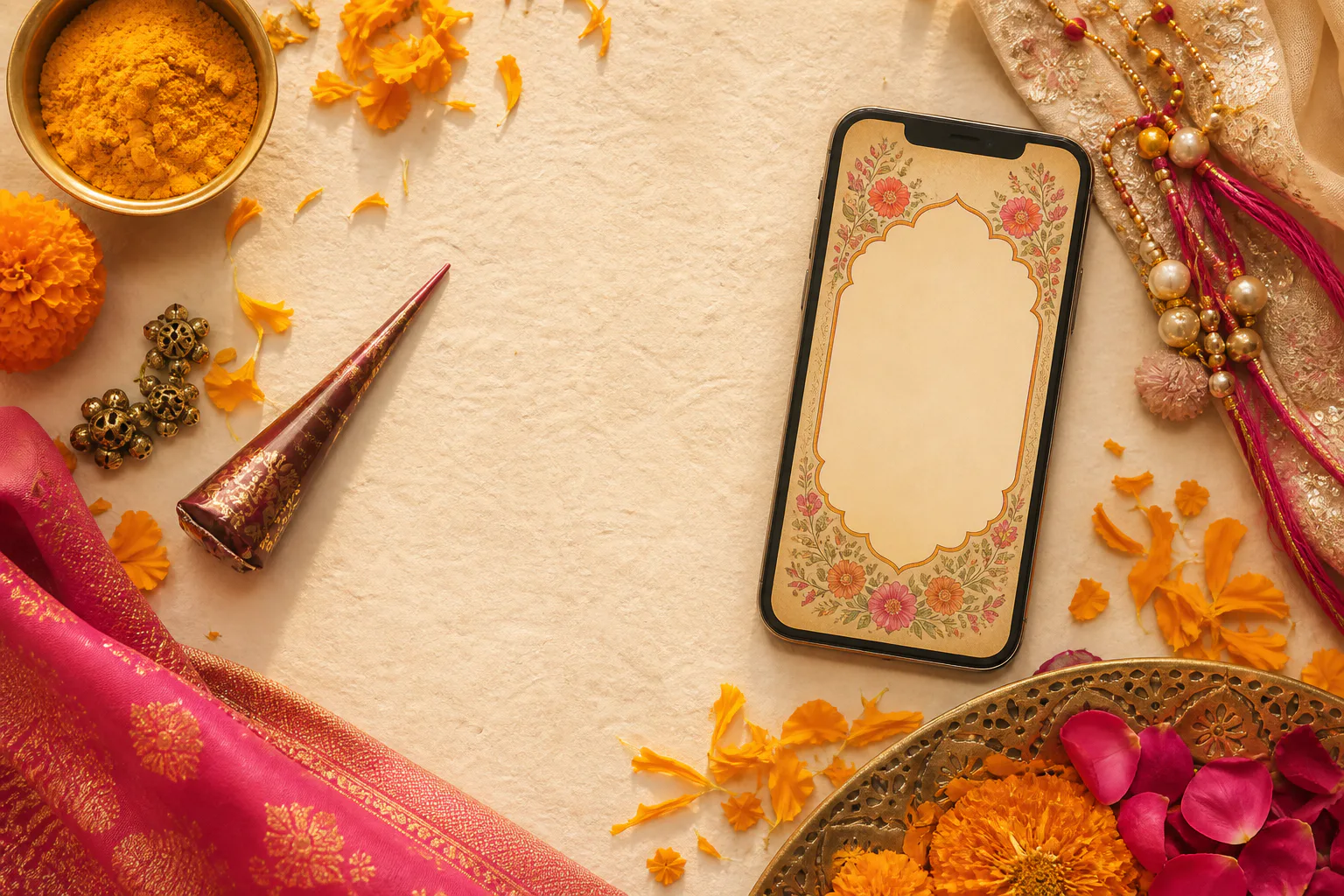
An Indian wedding invitation often carries an entire itinerary: intimate rituals, lively pre-wedding functions, the main ceremony and a reception—sometimes across several venues. Beautiful design matters, but careful information architecture is what keeps guests confident.
Build one master schedule first
List every function in chronological order with the local name your families use. Add guest arrival time, actual start time, venue, host and invitation group. That last field matters: not every guest may be invited to a home ceremony or intimate ritual.
Check travel time between venues and overnight gaps. If guests need to change clothes or arrange transport, the invitation should help them plan rather than simply state times.
Give every event a clear card
Use a consistent order on every event: name, short invitation line, date, arrival time, venue and directions. A visual theme can change from turmeric yellow for Haldi to jewel tones for Sangeet, but the placement of practical details should stay predictable.
- Haldi or Pithi: clothing note and indoor/outdoor guidance
- Mehendi: application availability and approximate duration
- Sangeet: performance start, dinner timing and dress code
- Main ceremony: arrival time, ceremony time and customs guests should know
- Reception: doors open, couple entry and meal information
Represent traditions and languages accurately
Use the ceremony name preferred by the couple and families. A Hindu ceremony may include Pheras, a Sikh wedding an Anand Karaj, and a Muslim wedding a Nikah; regional customs vary further. Avoid mixing motifs simply because they look 'Indian.' A design rooted in your own celebration feels more personal and respectful.
If guests read different languages, provide a deliberate language switch or parallel concise translations. Ask a fluent family member to review meaning and tone instead of relying only on literal machine translation.
Add the logistics out-of-town guests need
Include hotel information, the nearest airport or station, transport pickup details and one wedding-help contact. Use a precise map pin for venue entrances—large hotels and wedding lawns can have multiple gates.
Keep private travel arrangements off a public page when necessary. You can share a separate note with the relevant guests while keeping the main invitation uncluttered.
Collect RSVPs by event
A single yes or no is not enough for a three-day wedding. Ask which functions each guest will attend, how many invited members are coming and whether travel or accessibility help is needed. Only show events assigned to that guest group when your platform supports it.
Close responses early enough for catering and transport—often three to four weeks before the first event for a complex destination or multi-day celebration.
Use the same event names in your invite, RSVP export, vendor sheets and family WhatsApp updates. Consistency prevents headcount mistakes.
Frequently asked questions
What details belong on an Indian wedding invitation?+
Include each event's name, date, arrival time, venue and map, plus RSVP, dress guidance and travel details where relevant.
How do I invite different guests to different functions?+
Create guest groups and share only the relevant event schedule with each group. At minimum, use separate messages or invitation versions so no one assumes they are invited to every function.
Can an Indian wedding invitation be multilingual?+
Yes. Keep translations concise, use fonts that support each script and ask fluent speakers to proof tone, names, dates and ceremony terms.
Put the guide into practice
Create your wedding invitation
Start with a polished template, add every event and share one mobile-friendly link with your guests.
Explore templates